[ COFFEE ]
Storage for Coffee Beans
We are confident to handle and store specialty coffee beans, something that has become popular in recent years and we have gained good reputations from our customers. Also, our original information system for delivery for online shopping enables us to facilitate smooth delivery operations.
As well as providing high quality storage for coffee beans, we can provide a full range of services during storage in our temperature-controlled warehouse.
Discover how we unload, palletize and store coffee beans in variety of bags or cartons, and how we prepare them for delivery.
Port of Yokohama and Coffee Beans
Yokohama port has been ranked 1st for the quantity of imported coffee beans in Japan since 1990, largely due to increased coffee consumption in Tokyo. Fuji Warehouse Corporation has been handling coffee beans since 1972. The major producing areas are Brazil, Colombia, Vietnam, Indonesia, Guatemala, and Tanzania in the “Coffee Belt.” The coffee beans delivered to Yokohama by ship from those countries are unroasted green coffee beans.
Unloading, storage, and delivery of coffee beans
We store coffee beans in a 15℃ warehouse until they leave for a roasting factory.
We then send samples and prepare outbound cargo according to your order.
Unloading
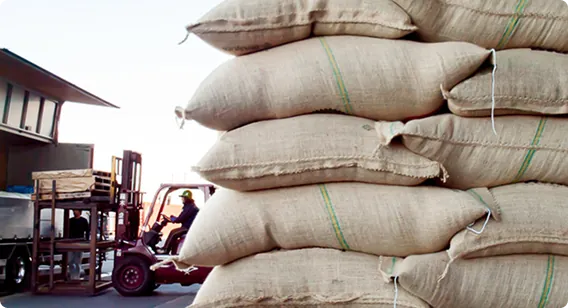
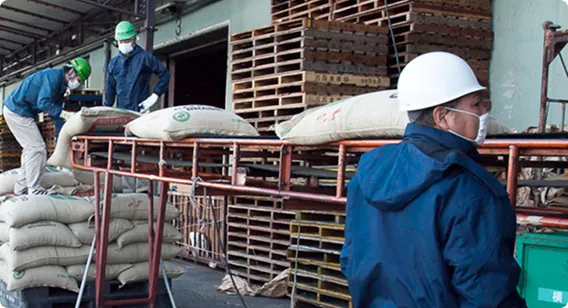
Coffee beans in bags or cartons are unloaded from the container.
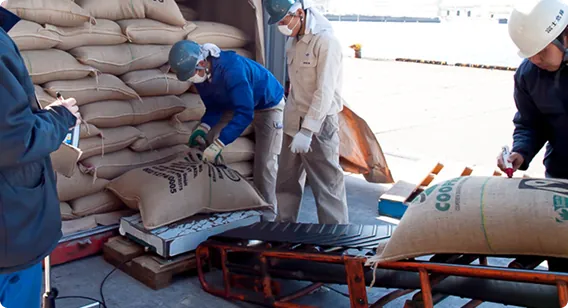
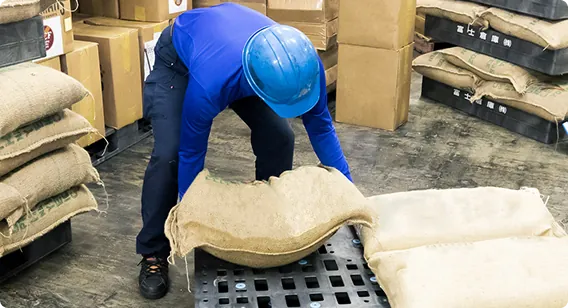
We place the container at the warehouse and unload bags of about 60–70 kg by conveyor, weigh each bag, and stack them on pallets. A 20-foot container holds about 18 tons, and a 40-foot container about 24 tons.
Weigh the units individually before piling them on a pallet.
Each bag has a standard weight by origin. A surveyor calls the weight, including “.5” meaning the standard weight plus 0.5 kg.
| 70 kg per bag | Colombian coffee beans |
|---|---|
| 69 kg per bag | Guatemala, Honduras, El Salvador coffee beans |
| 60 kg per bag | Brazil, Tanzania, Indonesia, Vietnam coffee beans |
| 45 kg per bag | Hawaiian coffee beans |
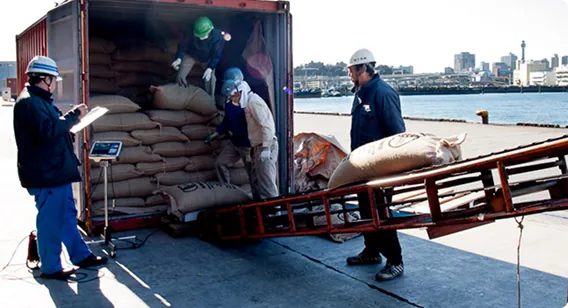
The weight is recorded on the bag or carton. Any defected items are removed and stored on a different pallet.
The called weight is written on each bag. Significantly short bags are set aside.
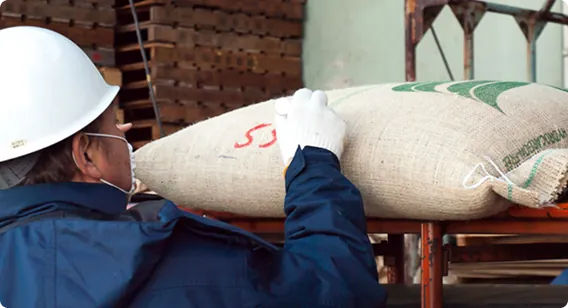
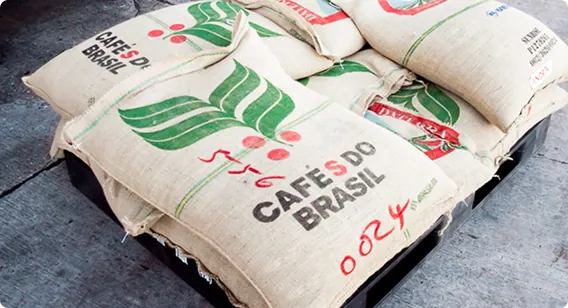
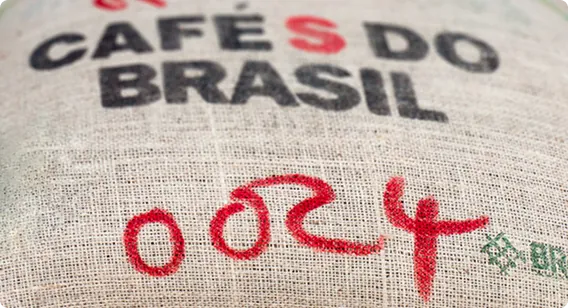
The ICO NO. (LOT NO.) is checked and written clearly on each bag / carton so it is easily identifiable.
We check and record the marks printed on each bag.
Storage
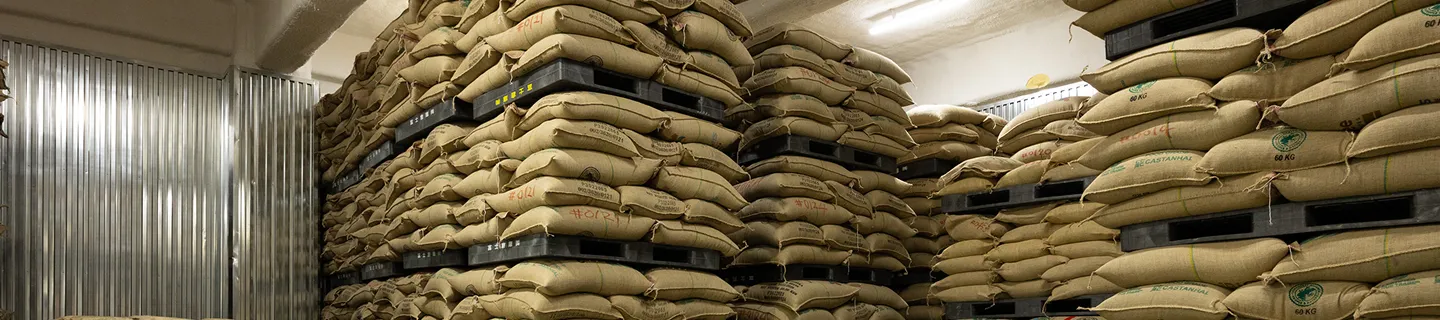
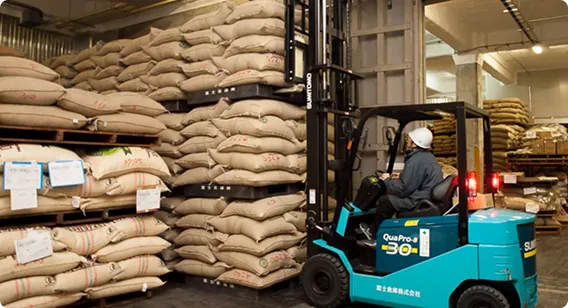
Bags on pallets are moved into the warehouse and stacked so they will not collapse.
Forklifts carry palletized bags into the warehouse and stack them safely.
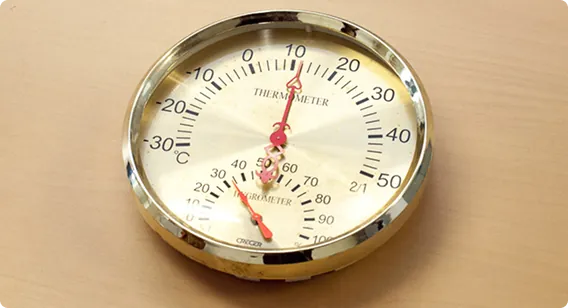
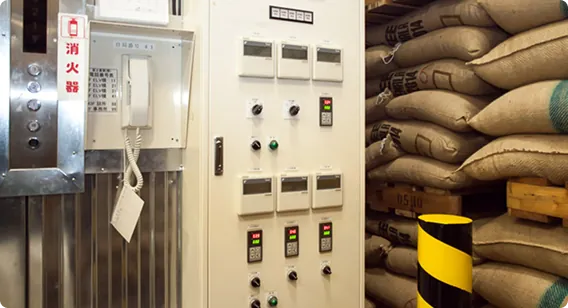
Temperature and humidity are controlled.
When coffee beans are stored at a controlled temperature, we keep them in a warehouse set to 15℃.
Thermometers and hygrometers in ambient and temperature-controlled rooms are checked and recorded every day.
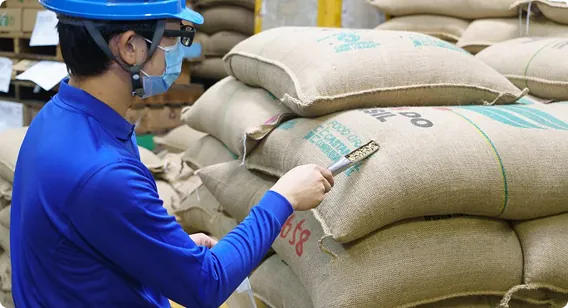
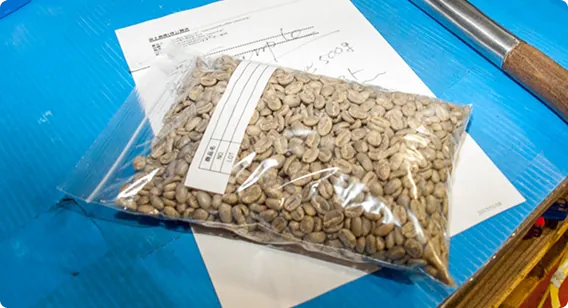
Samples are taken.
When you request a sample during storage, we insert a trier into the bag and take a sample.
* A pointed tubular tool used to pierce a grain bag and take a sample.
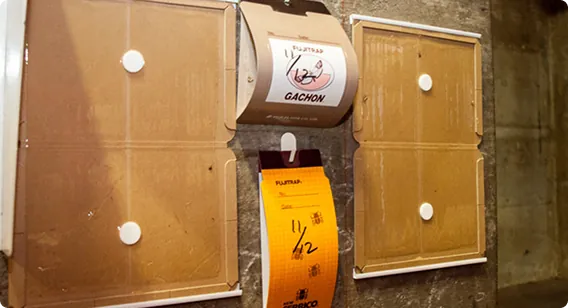
Pest traps are maintained.
A contractor monitors the warehouse and installs and replaces pheromone traps.
Delivery
Picking: cargo for delivery is taken from storage.
We take the ordered coffee beans from storage and prepare them for shipment.
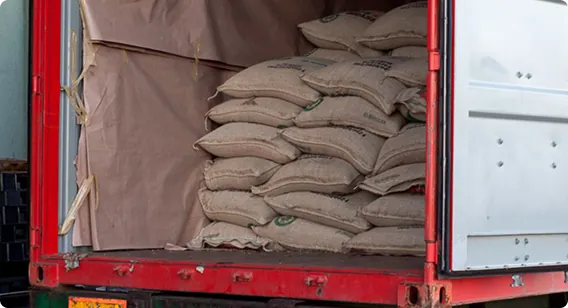
Cargo is loaded onto the truck.
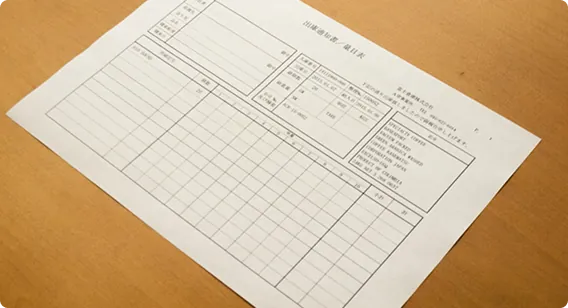
Forklifts load the cargo. When a weight list is required, the driver reads the bag weights and our staff records them.